

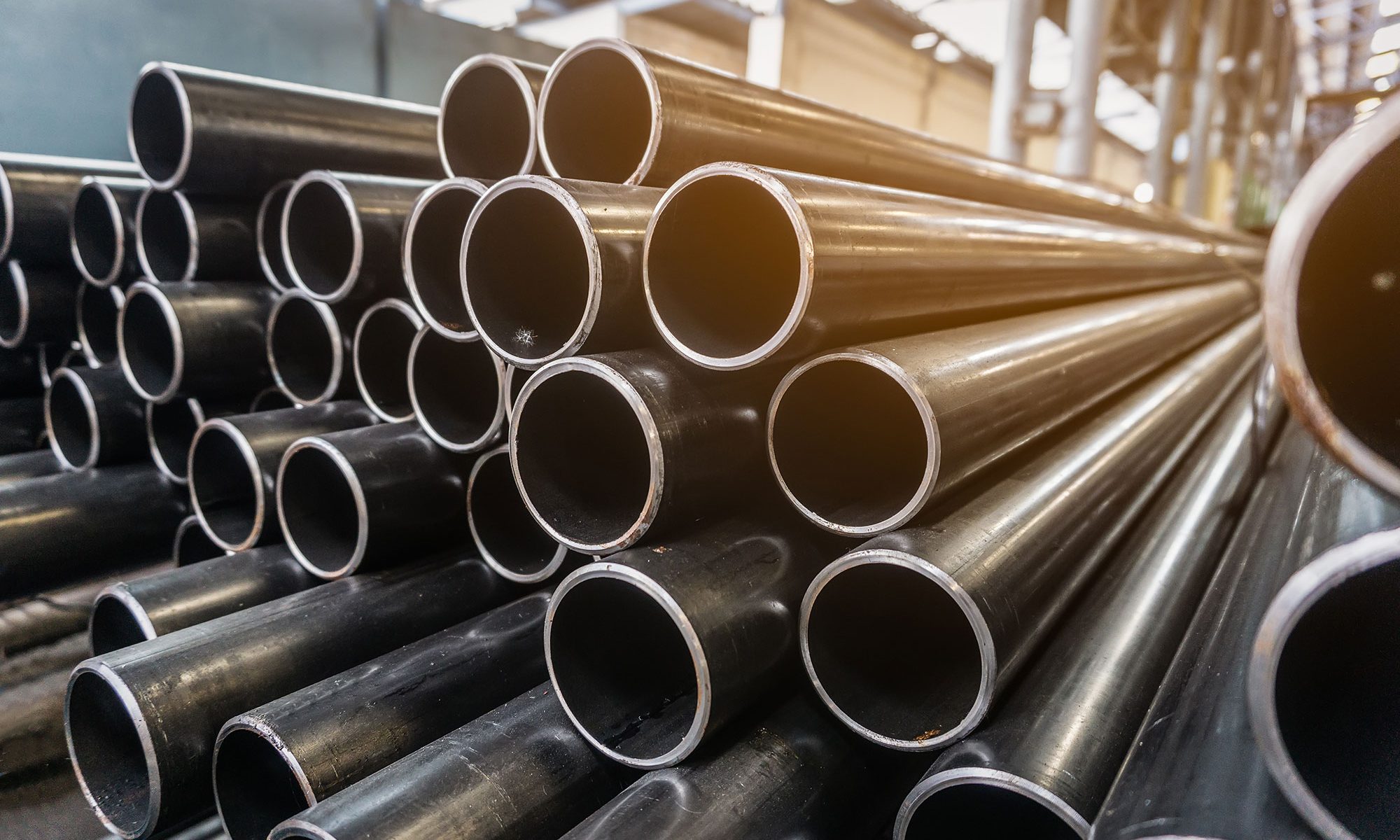
One of the major advantages of ERW tube is it provides the option to choose different types of end finishing. This includes bevelling and chamfering, as well as reduction, expansion, and beading. They are vital for applications where you need to join sections together, such as pipelines or structural frameworks.
Selecting the right type of end here can provide significant value. For example, it can mean a faster installation time, better performance (especially with higher pressures), cost savings, and weight reduction. We want to have a closer look specifically at pipe and tube bevelling. It’s a great choice for numerous applications and offers a number of advantages.
What is it?
 Bevelling involves creating an angular form at the end of a tube. The bevelled end is essential if you want to weld sections of tubing together to create long runs. It must be high quality to create a reliable joint. Issues here can cause flaws in the welding and joints, potentially leading to structural weaknesses, leaks, and other problems.
People often confuse bevelling and chamfering because of the similarities. The easy way to look at it is a chamfered end is a type of bevelled end. However, chamfering creates a 45 degree angle. Bevelling on the other hand can create a range of angles (the only exceptions being 45 degrees and 90 degrees). Most commonly, bevelled ends are 37.5 degrees. You can use both options with ERW tube and other varieties.
Why is it important?
Bevelling generally offers a number of key advantages. Most importantly, it makes it easier to create smooth, stable welds. A big part of this is the bevelled end makes it easier to place weld filler. Additionally, it is more effective when you apply heat, improving weld quality.
As well as the general advantages, bevelling provides some specific benefits for different industries. In the oil and gas industry, the robustness of the welds means there is a lower risk of leaking or pipe/tube failure. It increases safety and performance.
Bevelling is fantastic for construction too. It allows strong, stable, secure joints between ERW tube and other varieties. This can massively improve stability and the load bearing capacity. Ultimately, it makes structures more durable.
Choose the right method
Now that you know how useful bevelling is, it’s a good idea to have a closer look at different ways to create bevelled ends. Generally there are four options. They can have a big impact on key things like accuracy, time, repeatability, and mess.
The traditional way to bevel the end of tubing, including ERW tube, is do it by hand using a grinder. However, it is time consuming, messy, and has poor repeatability. Even if you have a skilful expert, it will be difficult to make every end exactly the same.
A second option is to use a torch or plasma cutter. It is faster and cleaner, but has some drawbacks too. Again there can be inconsistencies between ends. Plus, it is not viable for various materials; plasma torches can only cut metals and alloys that conduct electricity.
Finally, and generally the best option, is to use a bevelling machine. They are safer, faster, and more reliable. Crucially, they can deliver consistent, repeatable ends. A good machine can do a cycle and bevel the end of a tube in a matter of seconds to maximise productivity. There are two options here; stationary and portable machines. The latter are ideal if you want to finish tubing on site, however they are less productive.
Do you want to order ERW tube?
Whatever application you have in mind and type of end finishing you choose, it’s important to start with high quality tubing. It will have an impact on the performance, longevity, maintenance needs, and more. Union Steel Tubes is a top company if you want to order great products. We have a huge range, including round, square, oval, and more in various sizes.
So, if you want help to choose ERW tube for any applications, speak to us.